Tech
Superb AI Wins Silver at the Humanoid Robot Challenge in a Supermarket Environment

Hyun Kim
Co-Founder & CEO | 2026/11/24 | 10 min read
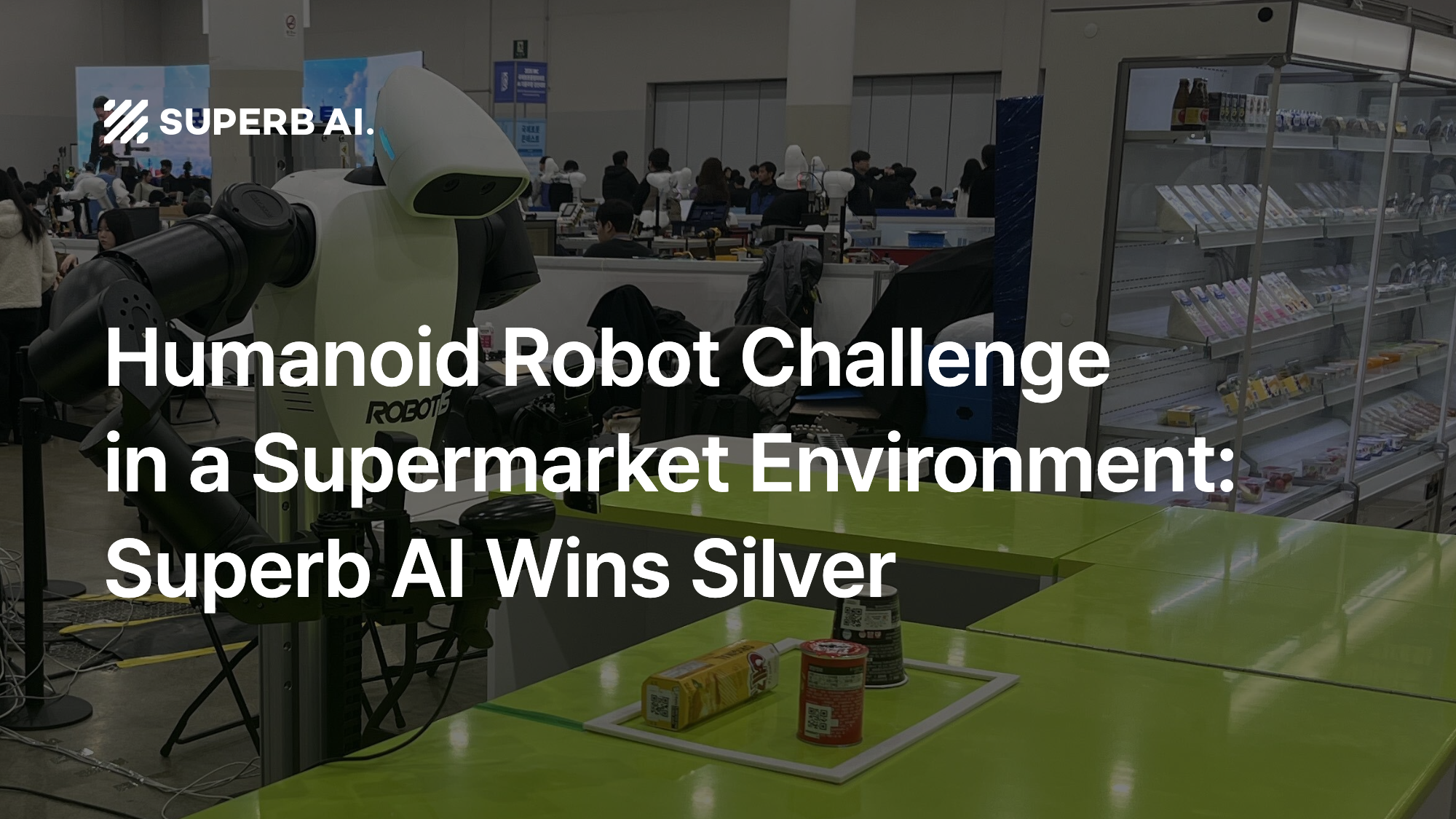
Superb AI's Physical AI research team won a Silver Award at the Humanoid Robot Challenge in a Supermarket Environment, held as part of the 21st International Robot Contest (IRC 2026) at EXCO in Daegu, Korea, on November 13 and 14, 2026.
The team used an agentic robotics approach to tackle three supermarket tasks with a humanoid robot: product delivery, shelf stocking, and checkout.
This was the inaugural edition of the challenge and Superb AI's first time participating.
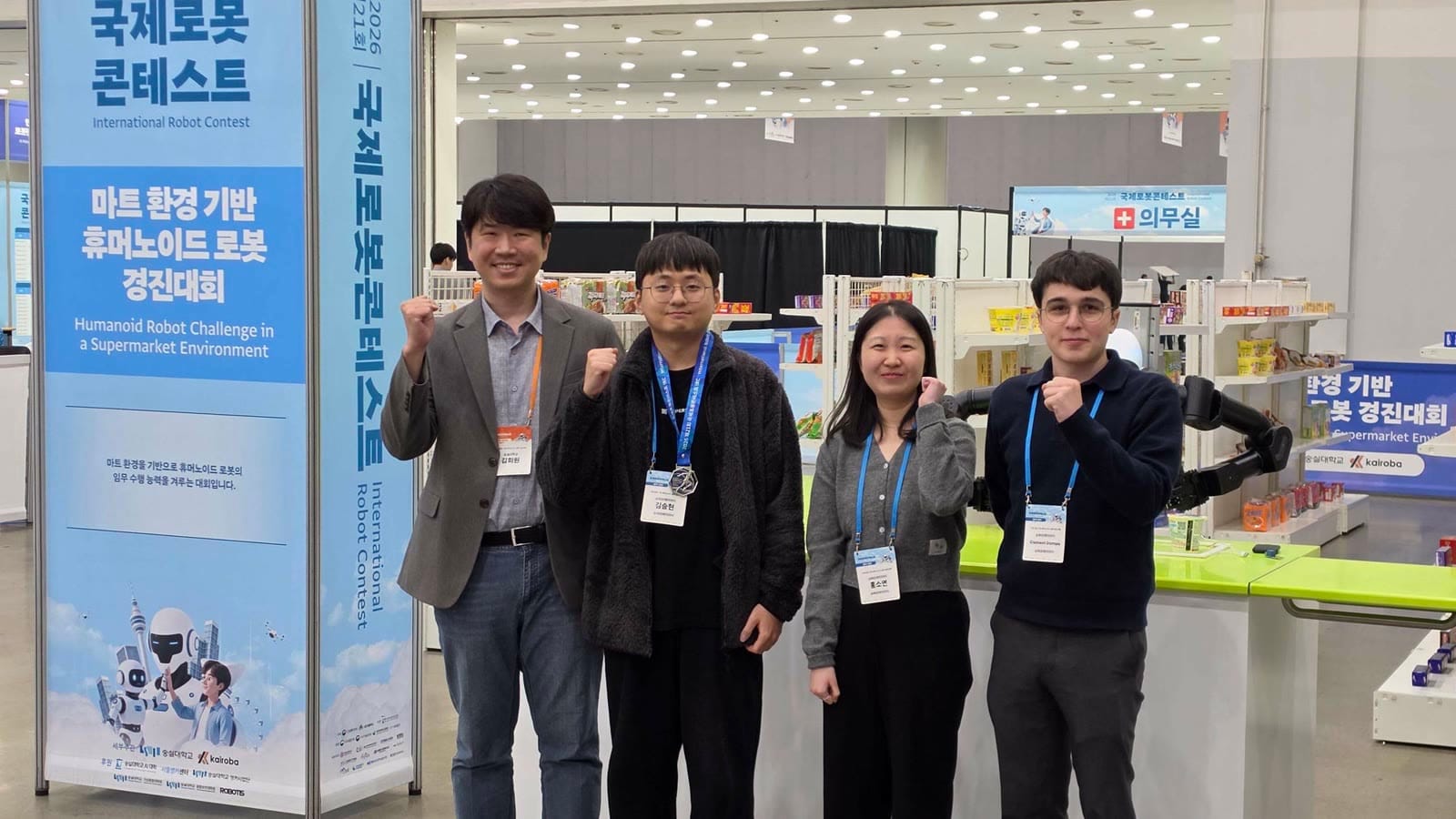
The Superb AI team with their silver medals, alongside Professor Heewon Kim of Soongsil University's Reality Lab, which co-organized the competition. From left: Professor Heewon Kim; Seunghyeon Kim, Soyeon Hong, and Clement Domps, machine learning engineers
📌 Key Takeaways
- Three members of Superb AI's research team won a Silver Award at the Humanoid Robot Challenge in a Supermarket Environment, a competition within the 21st International Robot Contest.
- The challenge consisted of three tasks: product delivery, shelf stocking, and checkout. The qualifying round took place in NVIDIA Isaac Sim, while the finals used a physical humanoid robot from ROBOTIS.
- The team adopted an agentic robotics approach in which an AI agent wrote and refined robot control scripts.
Competition Overview: Organizers, Robot, and Schedule
The International Robot Contest was hosted by Korea's Ministry of Trade, Industry and Resources and Daegu Metropolitan City, and organized by the Korea Institute for Robot Industry Advancement (KIRIA).
This year's event featured 12 competitions across Halls 2 and 3 of EXCO's West Building. The supermarket challenge was organized by Soongsil University and Kairoba, with sponsorship from ROBOTIS.
Image Caption: The supermarket-themed competition arena and the ROBOTIS AI Worker robot.
The competition used the ROBOTIS AI Worker (FFW-SG2). The qualifying round ran in NVIDIA Isaac Sim, and participating teams were provided with an official training dataset developed by Soongsil University's Reality Lab.
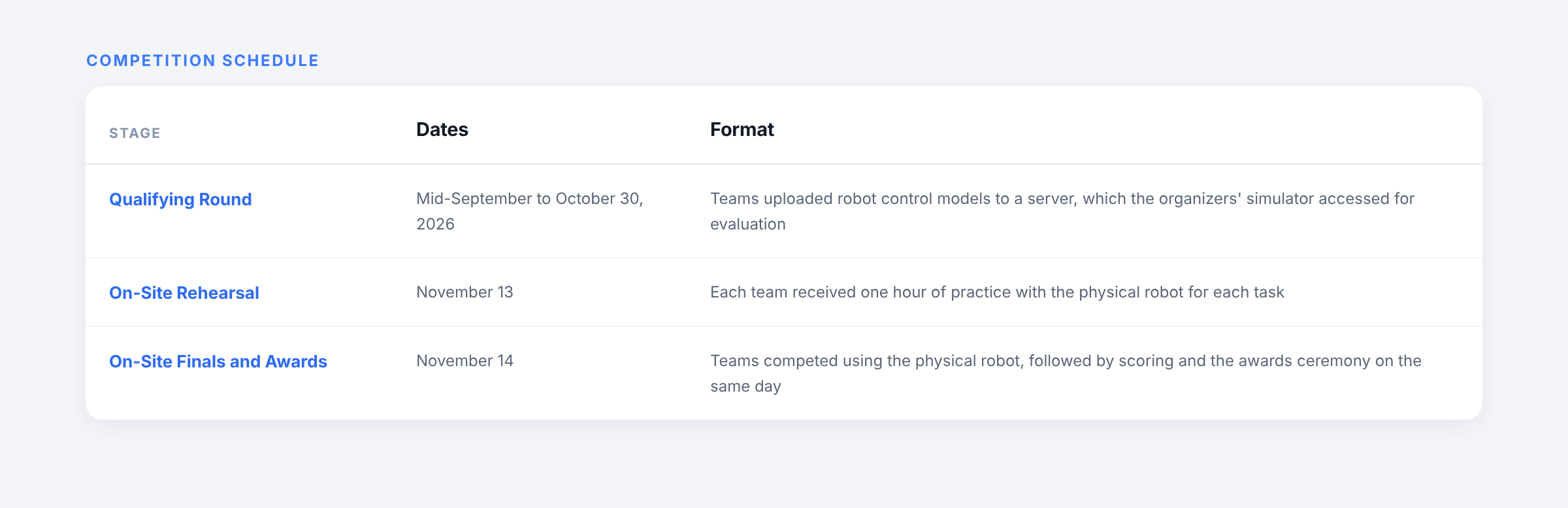
Schedule Sources: Official competition website and International Robot Contest event information.
Three Tasks: Product Delivery, Shelf Stocking, and Checkout
In the simulation-based qualifying round, the supermarket layout was regenerated for every episode, or individual attempt at a task.
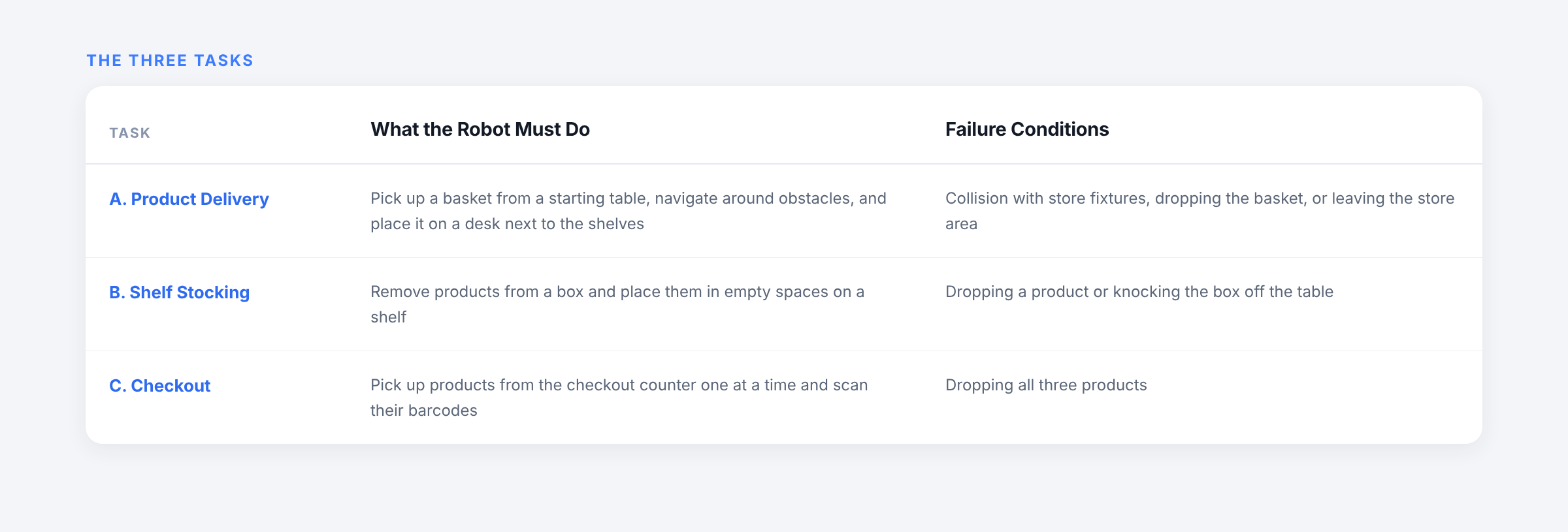
Task Definition Sources: Official competition website and competition simulation environment repository
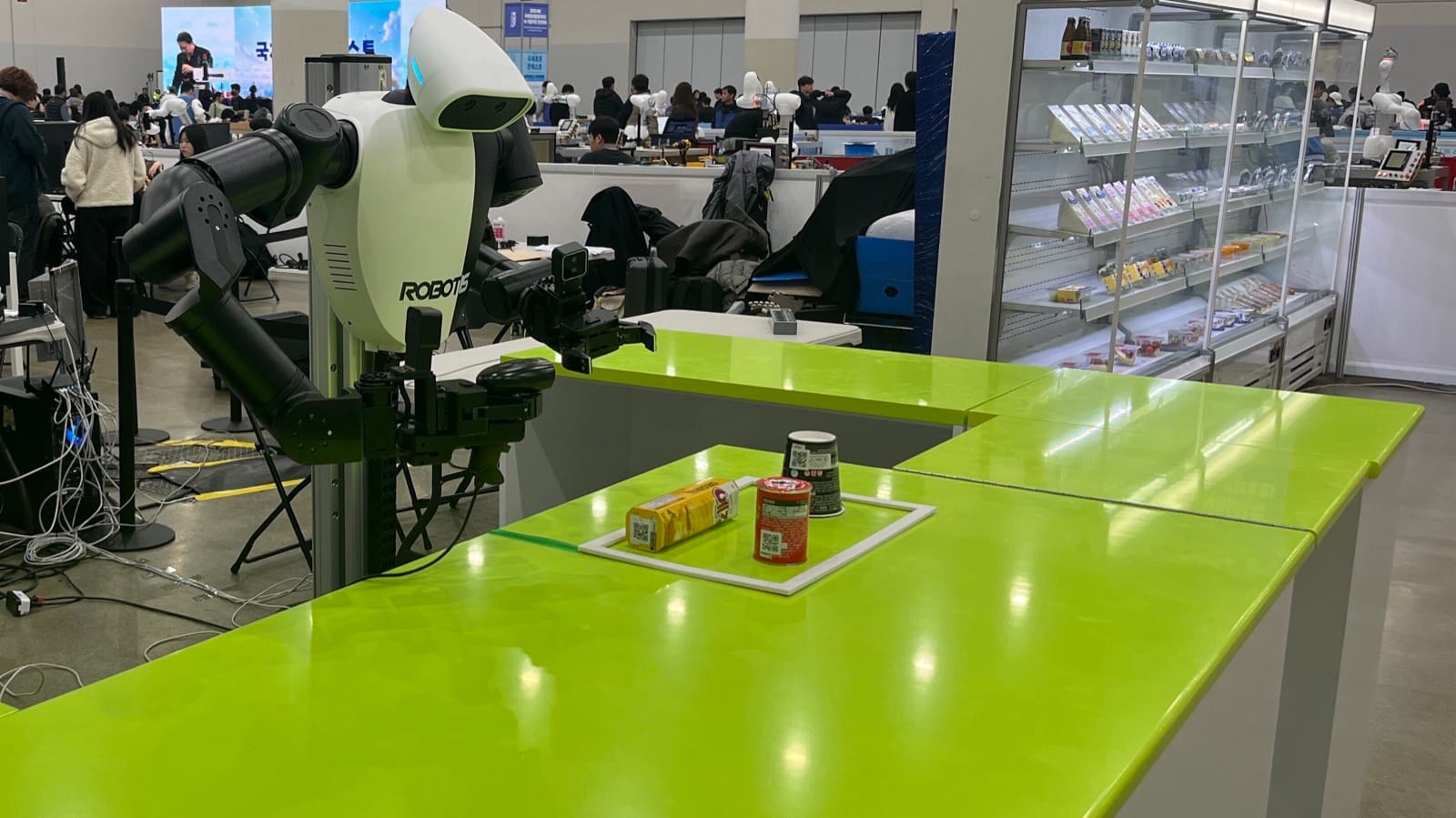
The checkout counter and barcode-labeled products used in Task C (Checkout)
Differences Between Simulation and the Physical Competition Environment
Real depth camera readings contain noise that is absent from the simulator. Lighting conditions at the competition venue and the weights of physical products also differed from the simulation settings. In the simulator, product weight was set to 100 g. In the physical environment, snacks weighed between 90 and 180 g, while cans weighed 340 g.
During the competition, the organizers also released an additional practice scenario, Task D, with noise designed to resemble that of a physical depth sensor.
How the Superb AI Team Prepared: Agentic Robotics and Domain Randomization
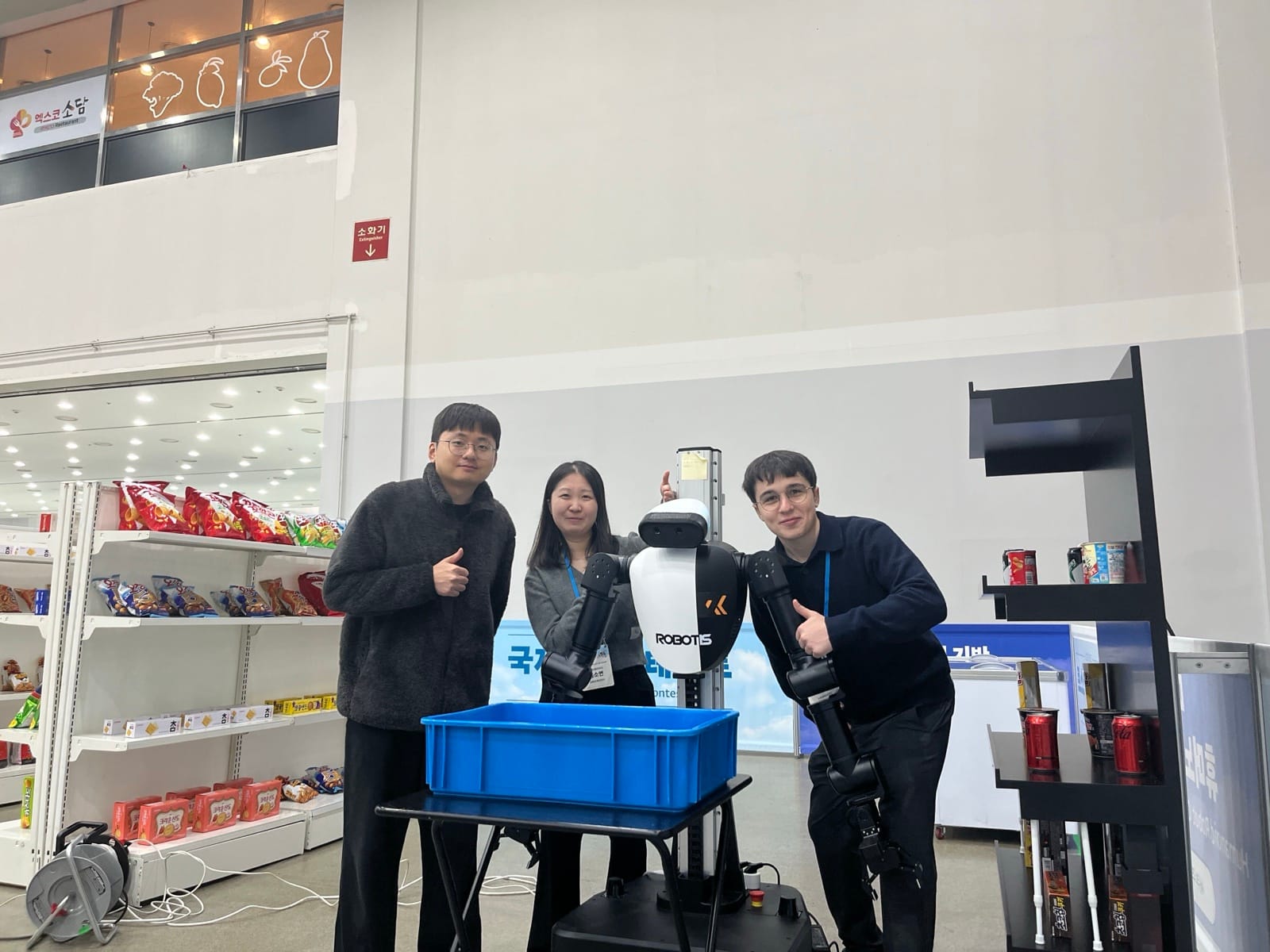
The Superb AI team with the competition robot at the on-site finals
The team consisted of three machine learning engineers. Early in development, the team experimented with a Vision-Language-Action (VLA) model that generates robot actions from camera observations and language instructions. For the final competition, however, the team adopted an Agentic Robotics approach.
Robot control methods are evolving through three stages:
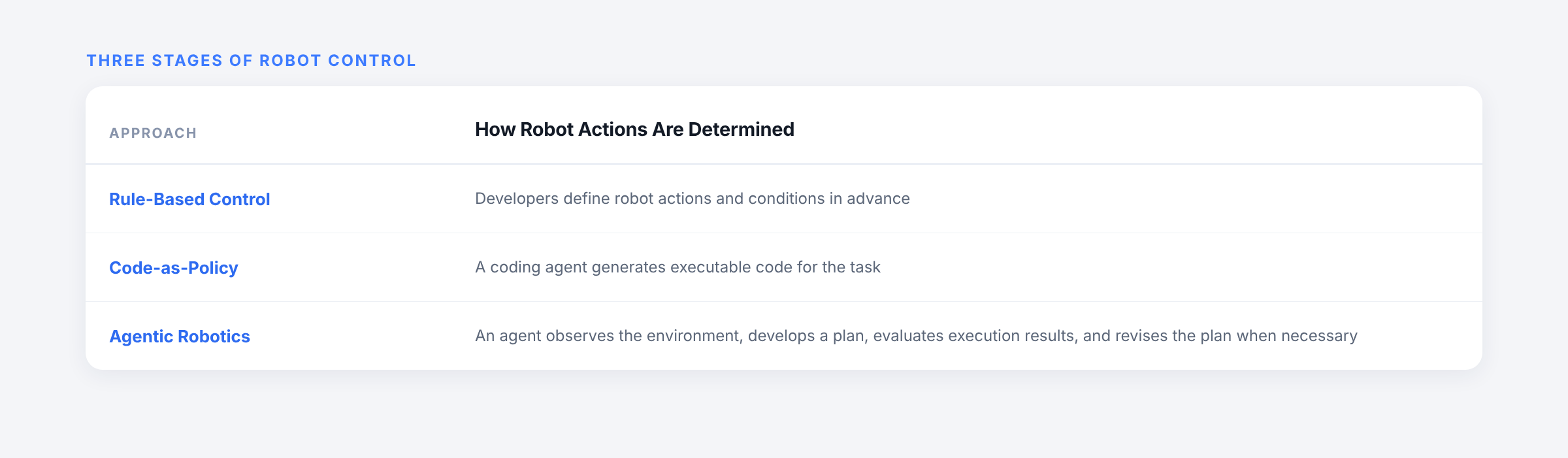
The final output was still a script, much like a conventional rule-based control system. The key difference was that the agent controlled the robot directly in simulation, iteratively evaluated and improved its approach, and generated the script used to execute the competition tasks.
The competition script combined an object recognition model with motion planning, which calculates the robot arm's movement path. The team's primary focus was providing the agent with access to the challenge environment and adapting the existing agent execution environment to the competition.
In the simulation environment where the agent ran its improvement loop, the team randomized 20 parameters for each episode. These included the robot's starting position (±5 cm) and orientation (±10°), desk position and height, lighting color temperature (4,000 to 6,500 K) and brightness, and basket weight (±10%). The team also configured the environment to use depth values calculated using the same method as the physical competition robot's depth camera, rather than relying on the simulator's native depth values. The goal was to help the agent develop solutions that remained effective even as the simulated environment changed.
Before the finals, the team visited Soongsil University's Reality Lab to test its approach on the physical robot. The robot's observed speed and travel distance constraints were then incorporated into the control settings.
Results from the Finals
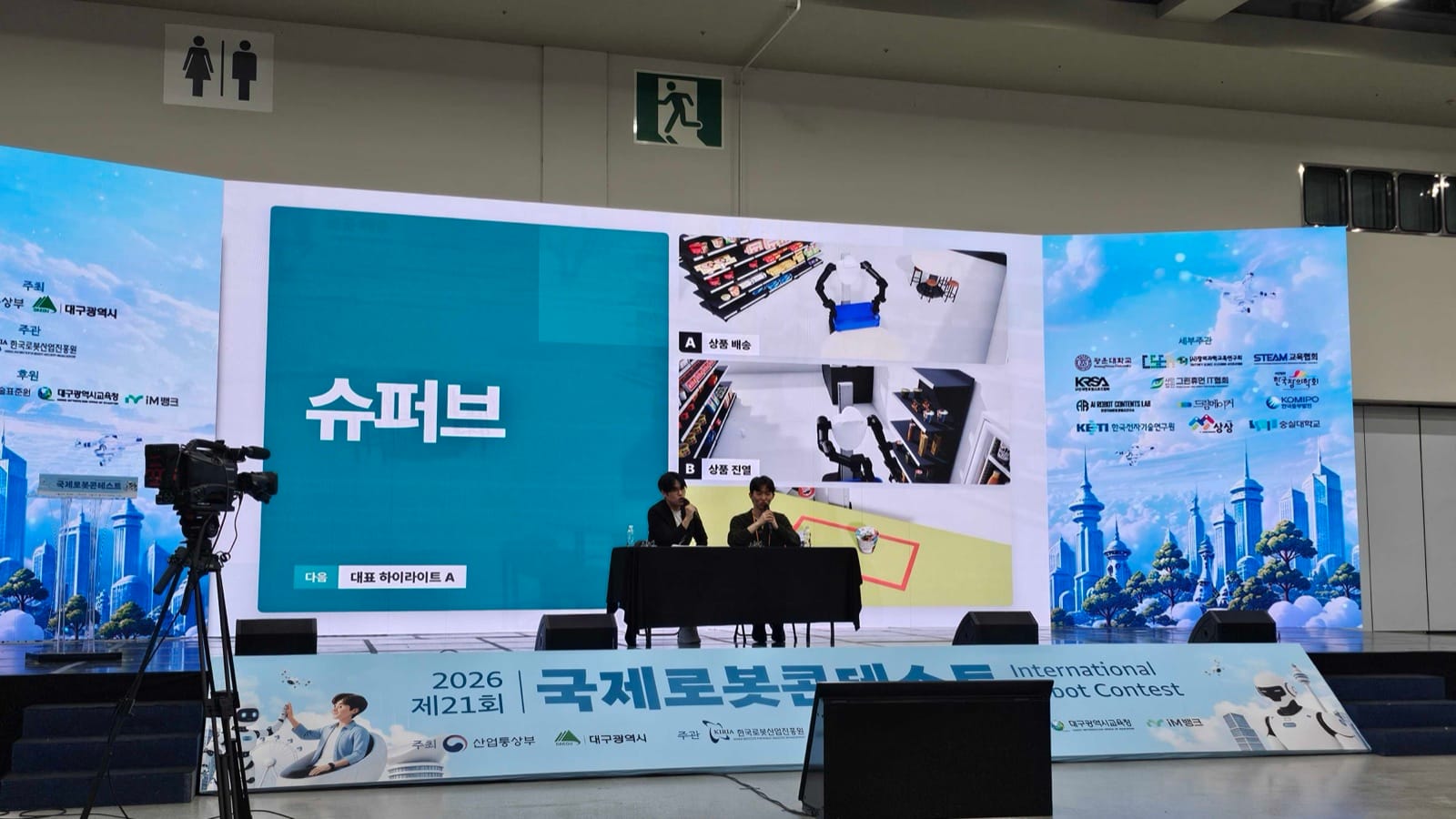
The Superb AI team, competing as Team Superb, appearing on the live broadcast screen during the on-site finals on November 14
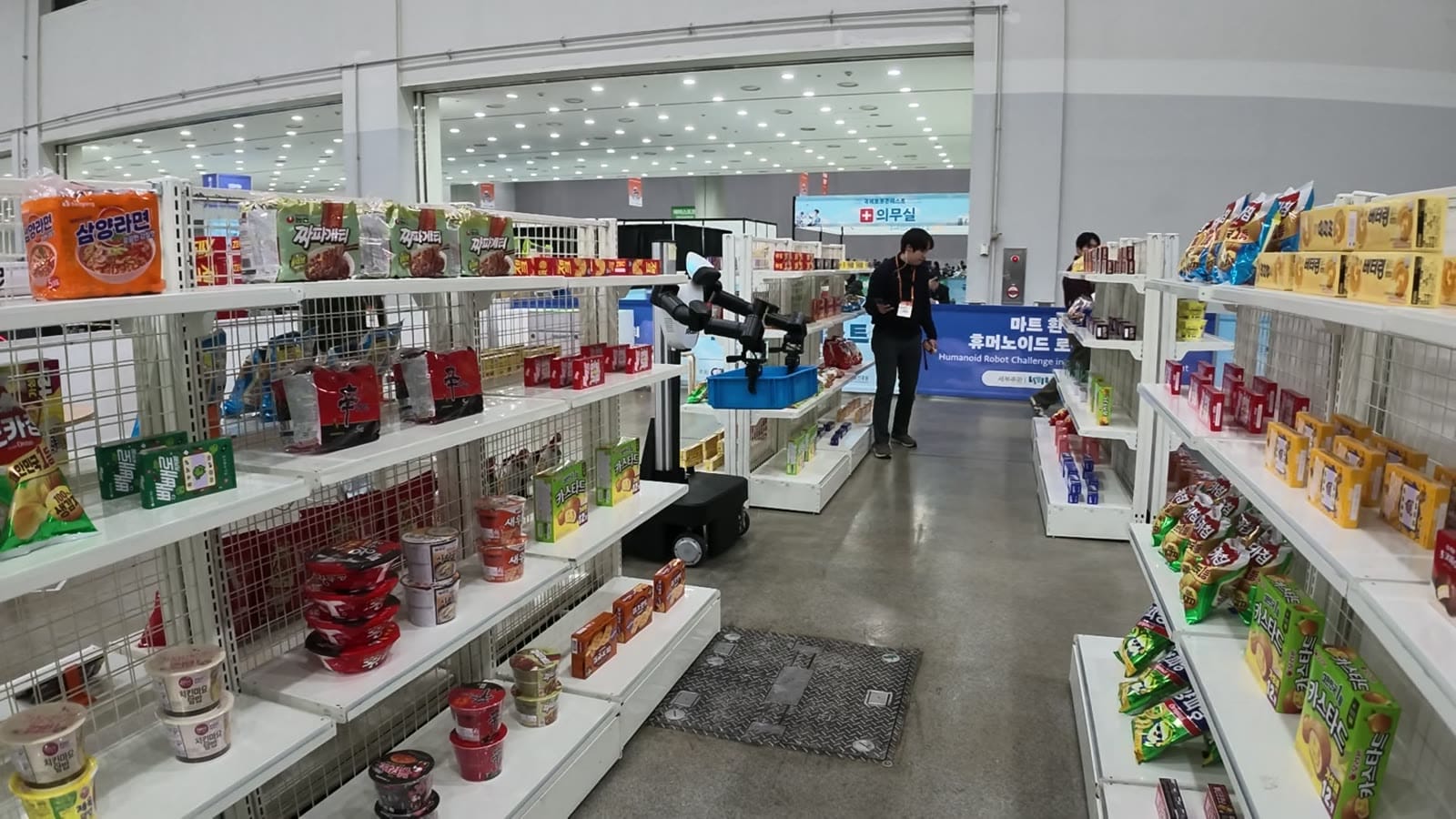
The competition robot carrying a basket between the shelves during the on-site finals (Still from video provided by the competition organizers)
In the on-site finals, points were deducted in two of the tasks. In product delivery (Task A), the robot pushed against a desk. In shelf stocking (Task B), it pressed down too hard on a shelf.
The biggest challenge in the physical competition was hardware calibration error. Even when the system correctly identified an object's location and sent a command, hardware inaccuracies sometimes prevented the robot from grasping the object. The team recalibrated the robot on-site. They also added a step right before grasping, using the wrist-mounted camera near the object to refine the position estimate.
Seunghyeon Kim, Machine Learning Engineer at Superb AI, said:
"The next competition will feature more challenging tasks and evaluation methods that demand stronger generalization. We plan to develop more precise models and systems that are more robust to changes in the environment."
What's Next: Building Robot Training Data
The research team plans to incorporate the 20 randomization parameters established during the competition, along with records from the physical robot tests, into the simulation conditions used to generate robot training data.
Superb AI is responsible for Physical AI data development in Stage 3 of Korea's Sovereign AI Foundation Model Project. The company's robot training data pipeline, which combines simulation-based generation with real-world data collection, is covered in Three Paths to Robot Training Data: Simulation, Real-Robot Collection, and Autonomous Patrol.
Superb AI is a Vision Intelligence company that transforms visual data from industrial sites into intelligence enterprises can act on. Through its Physical AI Data Factory, Superb AI develops 3D spatial, action, and object assets and creates robot training datasets using both simulation and real-world data collection.
Related Articles
- Build Once, Generate Endlessly: Putting the Synthetic Data Pipeline to the Test
- Why Doesn't Robot AI Have an ImageNet? A Test You Can't Grade with a Single Answer Key
- VLA vs RFM vs WFM vs VLM: Comparing 4 Robot AI Models
💬 Exploring robot training data or a simulation-based training environment? Tell us what type of robot you're working with and the tasks you want it to perform. Rather than starting with a sales call, we'll begin by reviewing your data requirements.
Related Posts
Tech
Three Barriers to Industrial AI and the Role of Vision Foundation Models: NAIRL Seminar Recap
Hyun Kim
Co-Founder & CEO | 32 min read
Tech
VLM Video Analytics: How It Differs from Traditional AI CCTV
Hyun Kim
Co-Founder & CEO | 7 min read
Tech
VLA vs RFM vs WFM vs VLM: Comparing 4 Robot AI Models
Hyun Kim
Co-Founder & CEO | 7 min read

About Superb AI
Superb AI is an enterprise-level training data platform that is reinventing the way ML teams manage and deliver training data within organizations. Launched in 2018, the Superb AI Suite provides a unique blend of automation, collaboration and plug-and-play modularity, helping teams drastically reduce the time it takes to prepare high quality training datasets. If you want to experience the transformation, sign up for free today.